
Exact Age on Any Date
Chronological Age Calculator – Exact Age in Years, Months and Days
Age Calculator
Enter your DOB by choosing birth day, month, and year accurately.
Your results
Hit “Enter” to process the details.
A chronological age calculator finds the exact time between a person's date of birth and a selected reference date, so you can find out your age precisely. Instead of showing just the number of years someone has lived, it shows age in years, months and days – and total months, weeks and days. Use this free chronological age calculator to check your own age, work out a child's or baby's age, or use it as a chronological age calculator for testing to get someone's age on a test date – a Pearson-style chronological age calculator search is usually about exactly this (this tool is independent and not affiliated with Pearson). A result may look like 8 years, 5 months and 12 days – the detail needed for everyday age checks, education, testing, speech therapy and pediatric records. It is free, needs no sign-up and runs in your browser.
- Exact Age
- Any Reference Date
- Free of Cost
- Users Privacy
Free Online Chronological Age Calculator
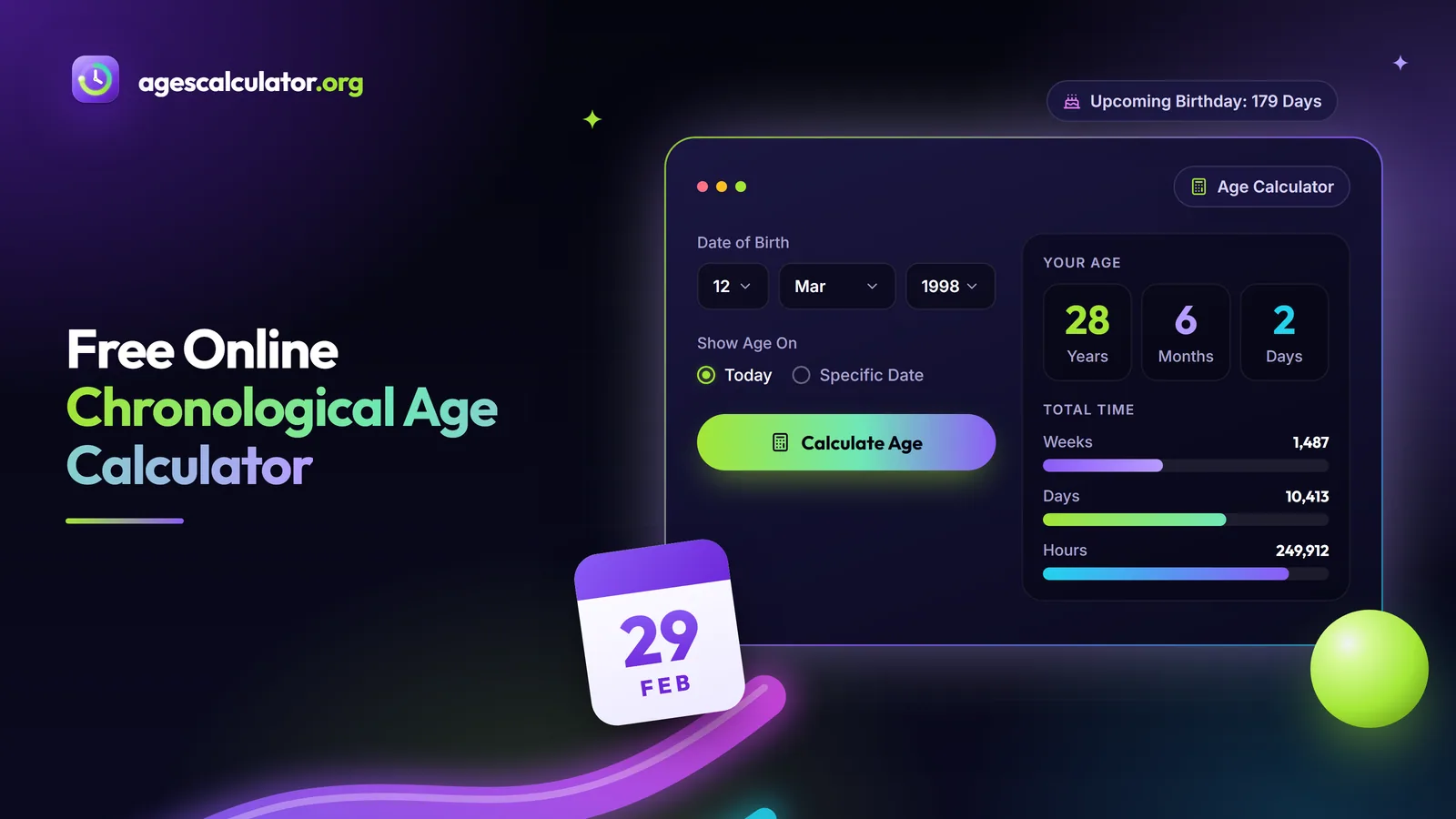
A free chronological age calculator needs just two dates: the date of birth and the reference date. Use today to find out your age right now, or choose another date if you need the age for an assessment, a previous event or a future date. The online chronological age calculator shows the years, months and days as well as the total months, total weeks and total days – so you get the exact age you need, whether you use it as a chronological age calculator for testing or as a simple way to calculate chronological age for a child, a baby or yourself.
What Is Chronological Age?
Chronological age is the amount of calendar time that has passed since birth. It is calculated from the date of birth to a reference date. If someone was born on 10 January 2000 and the reference date is 10 January 2026, the chronological age is 26 years; a more detailed result also includes extra months and days. Chronological age is not the same as biological age, developmental age, mental age or corrected age – each of those terms describes a different idea about age.
How to Use the Chronological Age Calculator
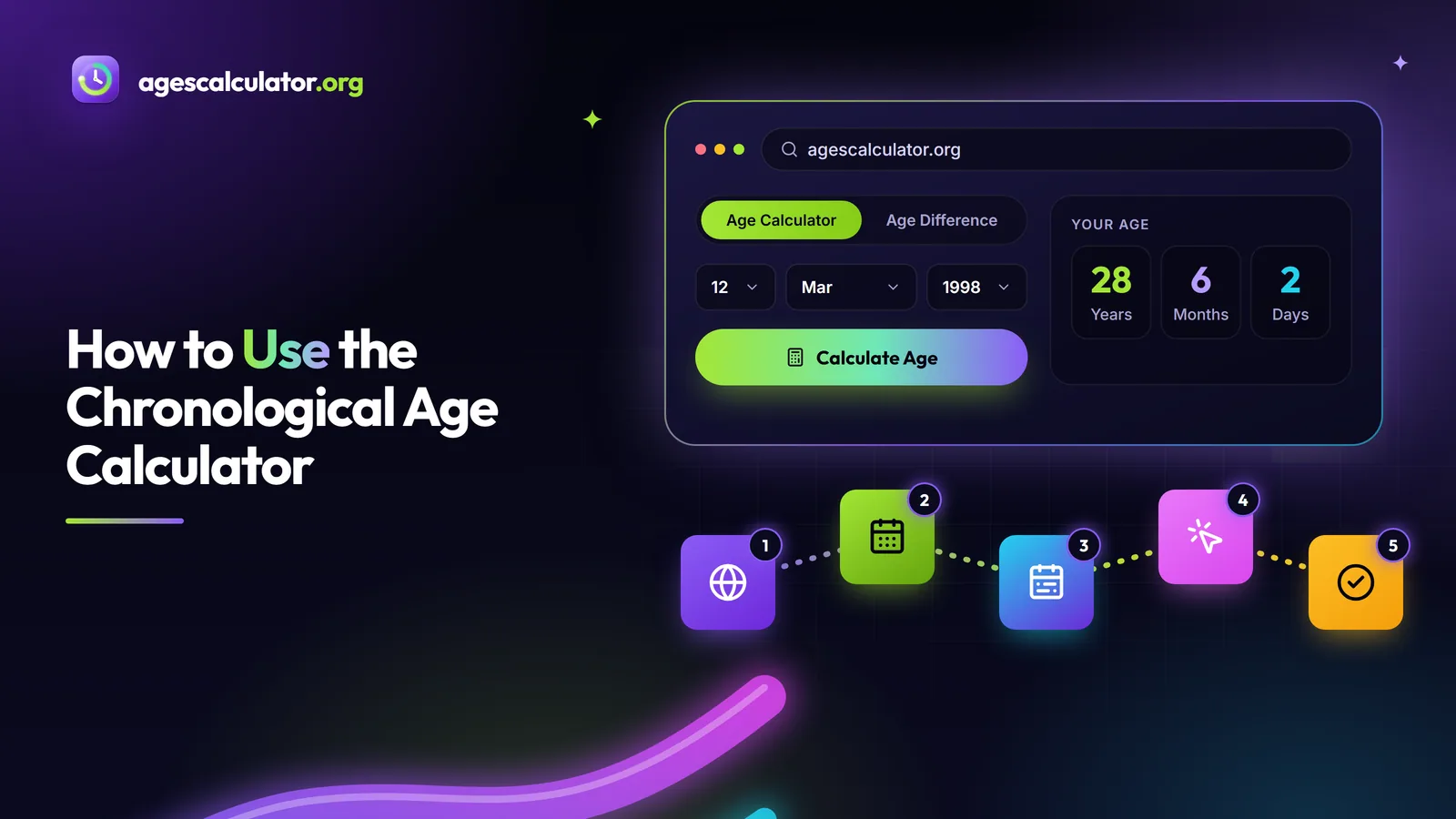
Three quick steps give you the exact age. Because the tool checks months and days as well, it is more precise than simply subtracting birth years.
- 1
Enter the date of birth: choose the correct day, month and year.
- 2
Select a reference date: use today for the current age, or the date that is relevant for your test or record.
- 3
Calculate the result: the tool compares both dates and returns the age in years, months and days.
Chronological Age in Years, Months and Days
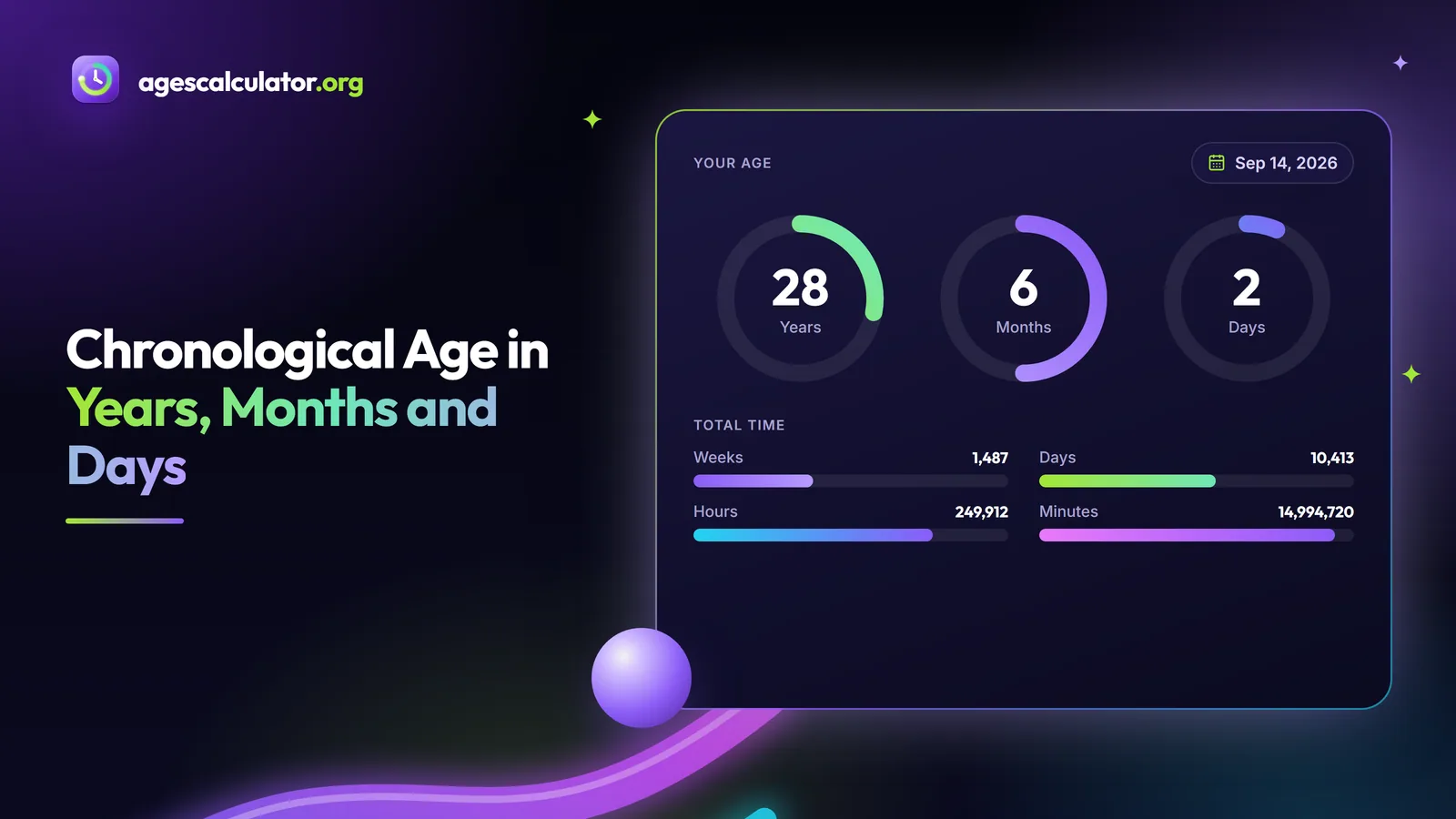
Many users need a chronological age calculator with a year-and-month result instead of completed years only. For example, 10 years, 3 months, 16 days means 10 completed years, 3 additional months and 16 remaining days. A chronological age calculator in months can also show the total number of months: 8 years × 12 = 96 months, and 96 + 5 = 101 completed months for an age of 8 years and 5 months. That is different from saying the month part of the age is simply five.
What Is a Reference Date?
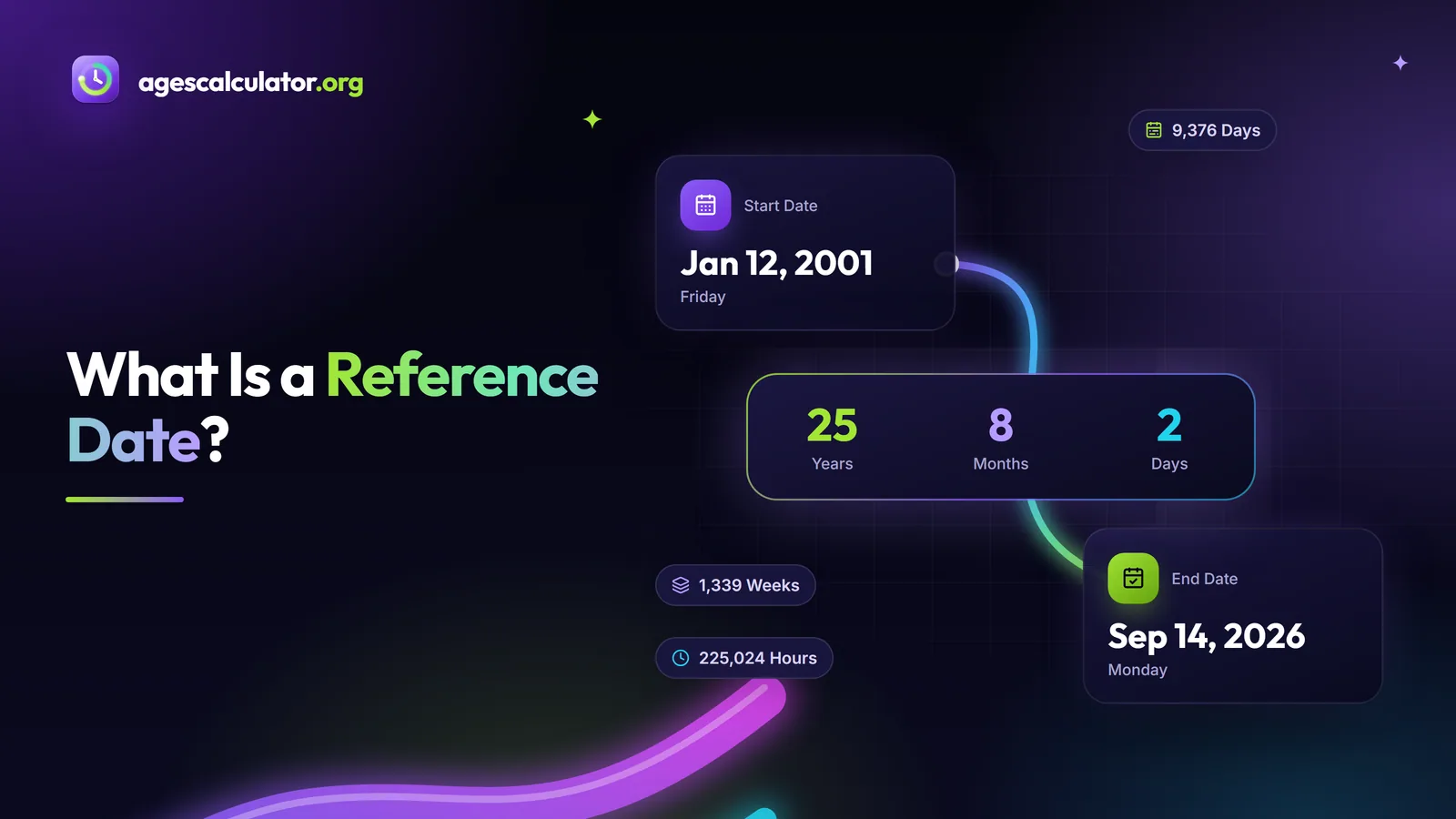
A reference date is the date on which you want the person's age calculated. Today is one option, but it is not always the correct one. If a child completed an assessment on 15 June, you need their age on the testing day – so 15 June should be used, not today's date. The reference date is especially important when using a chronological age calculator for testing. You can use any valid past or future date.
How to Calculate Chronological Age
The basic formula is: Chronological Age = Reference Date − Date of Birth. A calculator applies it with the real calendar, which is where manual calculation goes wrong.
Simple subtraction is not enough
Someone born on 20 December 2000 with a reference date of 22 September 2026: 2026 − 2000 = 26, but the December birthday has not happened yet, so the person is still 25 in completed years.
Use the full date
An exact calculation must use the complete day, month and year of both dates – not only the years.
Manual calculation
To calculate age manually, subtract days, then months, then years, borrowing from the previous month or year when necessary.
Different month lengths
Calendar months have 28, 29, 30 or 31 days, so manual calculation gets confusing. An online tool is usually easier and safer.
Chronological Age Calculator for Testing, SLP and Pediatric Use
Professionals often need a child's exact age on the day an assessment was completed. Chronological age only measures calendar time – it does not show whether development is typical, delayed or advanced.

Testing
A chronological age calculator for testing determines a person's age on the date an assessment was completed. You usually need the date of birth, the test date and the required age format. Some assessments use years and months, others years, months and days – always check the test manual, because age bands, rounding rules and reporting formats can vary.
SLP and speech therapy
Speech-language professionals can use the calculator to find a child's exact age on a test date. Years and months may matter for age-based assessment ranges in speech therapy.
Pediatric records
A chronological age calculator for pediatric use is also helpful for children's records, where an exact age in years, months and days is often noted.
Premature babies
Chronological age starts from the actual date of birth. Corrected or adjusted age is different because it may include an adjustment for prematurity, so it should be calculated separately when required.
Biological age
Biological age is a different concept related to physiological aging. A birth date alone cannot determine biological age, so a biological age vs chronological age calculator serves a different purpose.
Pearson and other test publishers
People searching for a Pearson chronological age calculator are usually looking for an age-calculation resource for assessment use. This calculator is independent and is not affiliated with Pearson.
Special Cases: Leap Years, Month Lengths and Any Date
A few situations need extra care – the calculator handles all of them for you:
February 29 birthdays
People born on 29 February continue to age in non-leap years. For legal or official purposes, specific rules may vary.
Different month lengths
Months contain 28, 29, 30 or 31 days, so exact age calculations use real calendar dates.
Past and future dates
You can calculate age on any valid past or future reference date.
Common Calculation Mistakes
Mistake
Subtracting only the years
Fix
- Compare the full dates – the birthday may not have happened yet in the reference year.
Mistake
Using today instead of the test date
Fix
- For assessments, always use the date the test was completed as the reference date.
Mistake
Ignoring months and days
Fix
- Use the years, months and days result when the assessment asks for an exact age.
Mistake
Reversing birth and reference dates
Fix
- Enter the date of birth first and the later reference date second.
Mistake
Confusing total months with remaining months
Fix
- Total months = completed years × 12 + remaining months; the month part of the age is only the remainder.
Mistake
Ignoring leap years
Fix
- A leap year adds a day, so use a calculator that reads the real calendar.
Mistake
Mixing chronological and corrected age
Fix
- Chronological age starts at the actual birth date; calculate corrected age separately for premature babies.
Mistake
Misreading DD/MM/YYYY and MM/DD/YYYY
Fix
- Pick day, month and year from the separate fields so the order can never be confused.
Final Thoughts
A free chronological age calculator gives a more accurate result than simply subtracting the birth years. Enter the date of birth, pick today or another reference date, and calculate age in years, months and days. For testing, SLP, pediatric, school or assessment use, choose the right reference date and follow any specific rules provided by the relevant assessment or organization.
Frequently Asked Questions
What does a chronological age calculator calculate?
It measures the calendar difference between the day you were born and a date you choose as a reference, so you can see how many years, months or days you have lived.
Can I calculate age from date of birth?
Yes. Enter the birth date and choose today or another reference date.
How do I calculate chronological age in months?
Multiply the completed years by 12, then add the remaining completed months.
Which date should I use for testing?
Use the date required by the assessment instructions, often the actual test date.
Is chronological age the same as corrected age?
No. Corrected age may include an adjustment related to prematurity.
What is a Pearson chronological age calculator?
People searching for a Pearson chronological age calculator are usually looking for an age-calculation resource for assessment use. This calculator is independent and is not affiliated with Pearson.
Is chronological age the same as biological age?
No. Chronological age is based on dates, while biological age refers to biological or physiological aging and cannot be determined from a birth date alone.
Is there a chronological age calculator for a child or baby?
Yes. Enter the child's date of birth and the reference date (today or the test date) to see the age in years, months and days, plus total months and weeks – handy for “how old is my baby?” and for child assessments.
How do I calculate corrected or adjusted age for a premature baby?
Corrected (adjusted) age is usually the chronological age minus the number of weeks the baby was born before 40 weeks. This tool gives the chronological age; subtract the weeks of prematurity yourself, or follow the instructions of the assessment you use.
How many months is 18 years?
18 years are 216 months (18 × 12). In the same way 17 years are 204 months and 19 years are 228 months. For an exact age in months, enter the date of birth and read the total months.
Can I use this as a test age calculator, for example for Ages and Stages?
Use it to get the exact chronological age on the test date in years, months and days. Questionnaires such as the Ages and Stages Questionnaire choose the form by age in months and may require an adjustment for prematurity, so always follow the manual. The same exact age in years and months is what most screeners, such as ASQ or Brigance, ask you to look up.
What is the difference between an age calculator by date of birth and a chronological age calculator?
Both use the date of birth. An age calculator by date of birth usually shows the current age, while a chronological age calculator emphasises the exact age on any reference date – such as a test date – in years, months and days.
How do I calculate a baby's age in weeks and months?
Enter the baby's date of birth and today's date (or the check-up date): the calculator shows the age in years, months and days plus total weeks and total days, so a baby age calculator result from weeks to months is one click away. For a premature baby, subtract the weeks born early to get the corrected age.